
Which cryptocurrency should I use?
Overview
There are thousands of different cryptocurrencies, and new ones are likely being created as you read this article. However, as a buyer, you don't need to worry about all of them. You should focus on those that offer you an efficient, fast, and low-cost purchasing experience.
In this article, we will share our own purchasing experience and help you choose the ideal cryptocurrency for your transactions.
Fees

Bitcoin transaction with a $6.71 USD fee.
Before continuing, it's important to note: all cryptocurrencies have a transaction fee.
This is one of the main disadvantages of buying with cryptocurrencies. To transfer funds from one account to another, you must pay a fee—something that is often a thing of the past in traditional banking.
However, there’s no need for concern; this is simply part of choosing the right cryptocurrency for you. There are options with transaction fees as low as just a few cents.
Why are there fees?
In short, because cryptocurrencies do not rely on banks or traditional intermediaries, you must pay a fee to other users (known as miners or validators) to validate and record your transaction on the ledger (called the blockchain). This process ensures your transaction is completed and the recipient receives the funds.
Recommended Cryptocurrencies
For any purchase, we always recommend and accept through our provider, NOWPayments, the following cryptocurrencies:
As mentioned earlier, these cryptocurrencies are known for their ease of use, fast transaction speeds, and extremely low fees. With them, you can make purchases that are confirmed within minutes and with transaction fees of just a few cents.

Litecoin transaction with a $0.0062 USD fee.
What about BTC or ETH?
BTC (Bitcoin) and ETH (Ethereum) are the world’s most popular cryptocurrencies, but we do not consider them ideal for purchasing products due to their often high transaction fees.
Some of our customers have made transactions with BTC or ETH and ended up paying fees as high as $40 USD—almost half of their intended purchase amount! Additionally, many platforms deduct this fee directly from the amount being transferred, which can result in underpayment issues if you are not aware.
What if my platform doesn’t support these recommended cryptocurrencies?
If your platform does not support any of the cryptocurrencies we recommend, you can look for similar cryptocurrencies supported by your platform, or consider switching to a platform that does offer support for low-fee options.
Networks
On some platforms or with certain cryptocurrencies, you may encounter something called a "Network." Generally, we do not recommend that new users adjust this option, as it adds extra complexity to cryptocurrency transfers. However, learning about networks can be beneficial, as it allows you to use a wider variety of cryptocurrencies without their usual drawbacks.
Essentially, a network is the database where all transactions are recorded (also known as a blockchain). Each cryptocurrency typically has its own database for storing its transactions. However, some databases support multiple cryptocurrencies—these are referred to as networks.
For example, Bitcoin (BTC) is the most popular cryptocurrency in the world and has its own network, but it also exists on other networks. If you send BTC using:
The Bitcoin network: You can expect high transfer fees and long confirmation times.
The Ethereum network: Slightly lower fees and shorter confirmation times.
The TRON network: Transfer fees of just a few cents and very fast confirmations.
Therefore, using networks, you can send BTC via the TRON network and take advantage of the benefits offered by other cryptocurrencies like LTC.
*We have actually simplified this example to understand the networks, since BTC does not exist directly in other networks, but is implemented with cryptocurrencies whose value is similar.
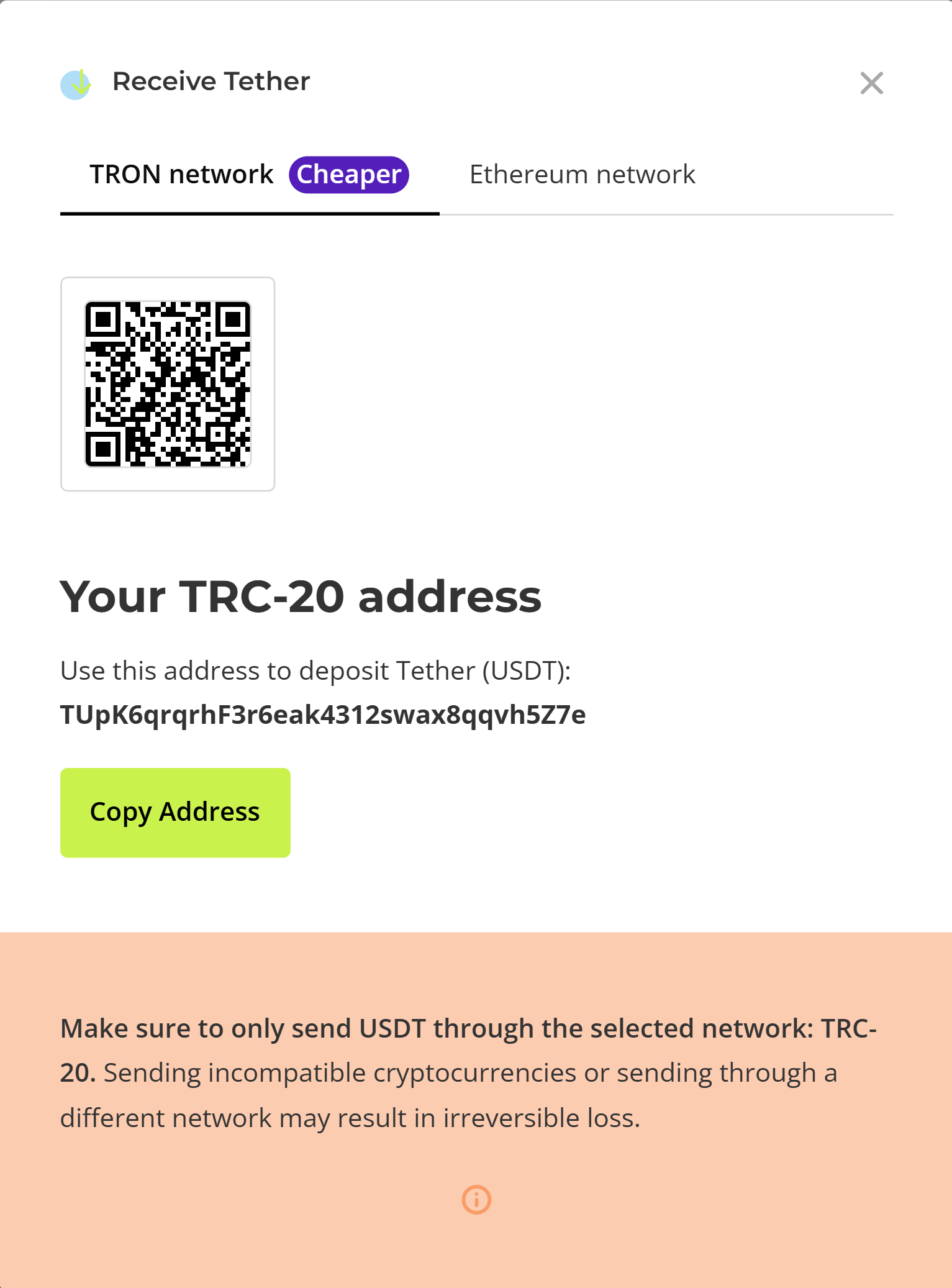
The “Paxful.com” platform with the ability to receive USDT on both the TRON and Ethereum networks.
However
This does add some additional complexity, because BTC on the Bitcoin network cannot be sent to the Ethereum or TRON networks. You can only make transfers between wallets using the same network.
Some platforms support sending cryptocurrencies across different networks and handle the exchanges for you, but not all platforms offer support for every network.
It is also easy to confuse the source or destination network of your cryptocurrency, which could result in sending funds to the wrong network and permanently losing your assets.
Conclusion
To take advantage of network benefits, we recommend paying close attention to and reading all text and warnings on your platform to avoid confusion and mistakes. Once you learn to identify the correct networks, you'll be able to send different cryptocurrencies without worrying about high fees or long confirmation times.
These are the networks we recommend and accept through our provider, NOWPayments: